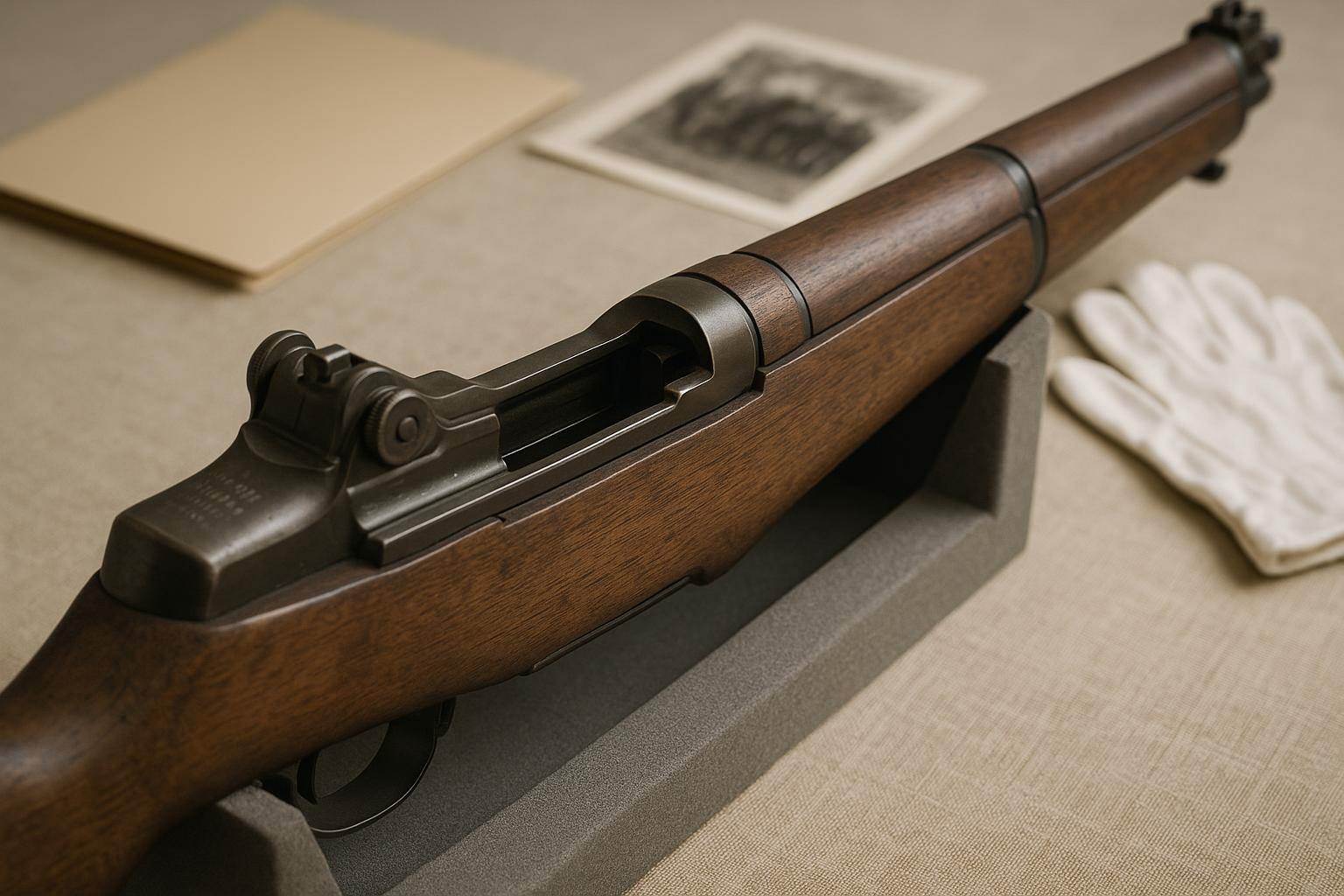

A rifle's preservation history often begins before its first inspection. Grease, replacement packaging, depot markings and even the way a sling was fitted can reveal what happened after military service. Such details may be more informative than a polished stock or newly blued surface.
The M1 Garand illustrates this principle. Designed to give infantry a self-loading capability, it became a field tool, a maintained system and eventually a historical object. Its receiver, operating parts, stock and markings each carry part of that biography. A collector must read them together.
The problem that shaped the Garand
The M1 was developed to replace the manual-action service rifle used by the United States military. Its defining achievement was not decorative novelty but a change in how ammunition was fed and the action operated. The operating system, en bloc clip and robust receiver addressed military demands for dependable service under difficult conditions.
That purpose matters when examining one today. Wear on a stock wrist, finish loss around handling points or evidence of repeated maintenance may be consistent with field use. These marks are not automatically defects; their meaning depends on where they appear and whether the rest of the rifle supports the same history.
Replacement components can also be historically meaningful. Military organizations repaired equipment to keep it in service. A rifle assembled from period-correct parts may document an arsenal or depot rebuild rather than one uninterrupted production run.
Condition is more than appearance
Firearm condition should begin with safety, not cosmetics. Treat every firearm as loaded until its status has been established by a competent person using safe handling practices. Keep the muzzle pointed in a safe direction, keep fingers outside the trigger area and do not attempt technical disassembly unless you are trained to do so safely.
After safety has been addressed, separate condition into several questions. Is the metal worn, corroded, refinished or simply discolored by age? Does the wood show ordinary handling marks, active damage or evidence of sanding? Are screws, pins and other visible components undisturbed, damaged or replaced? These distinctions are more useful than a single label such as "excellent" or "rough."
Mechanical condition requires separate treatment. A rifle may retain attractive finish while containing unsafe or unknown internal parts; exterior wear does not establish that the mechanism is sound. A qualified gunsmith should assess function and safety before firing. A collector should not use a historical firearm to test personal repair skills.
Provenance gives the parts a timeline
Rifle provenance is the chain of evidence connecting an object to its past. It may include service records, arsenal or importer markings, family documents, photographs, sales records and credible details about where the rifle was found. No single document proves every claim, but independent clues can reinforce one another.
The strongest provenance explains transitions. Why does the stock differ from the receiver's finish? When did a postwar marking appear? Was the rifle stored, issued, rebuilt or altered for civilian use? A dated photograph may answer one question while raising another. That is useful: good research narrows uncertainty rather than pretending to remove it.
Be cautious with stories based entirely on oral tradition, especially when the physical rifle contradicts them. A family may sincerely remember that a rifle came home from a particular conflict, while a later replacement part or documented import mark shows that its present configuration was assembled afterward. The object and paperwork should be considered together.
Originality is a question of context
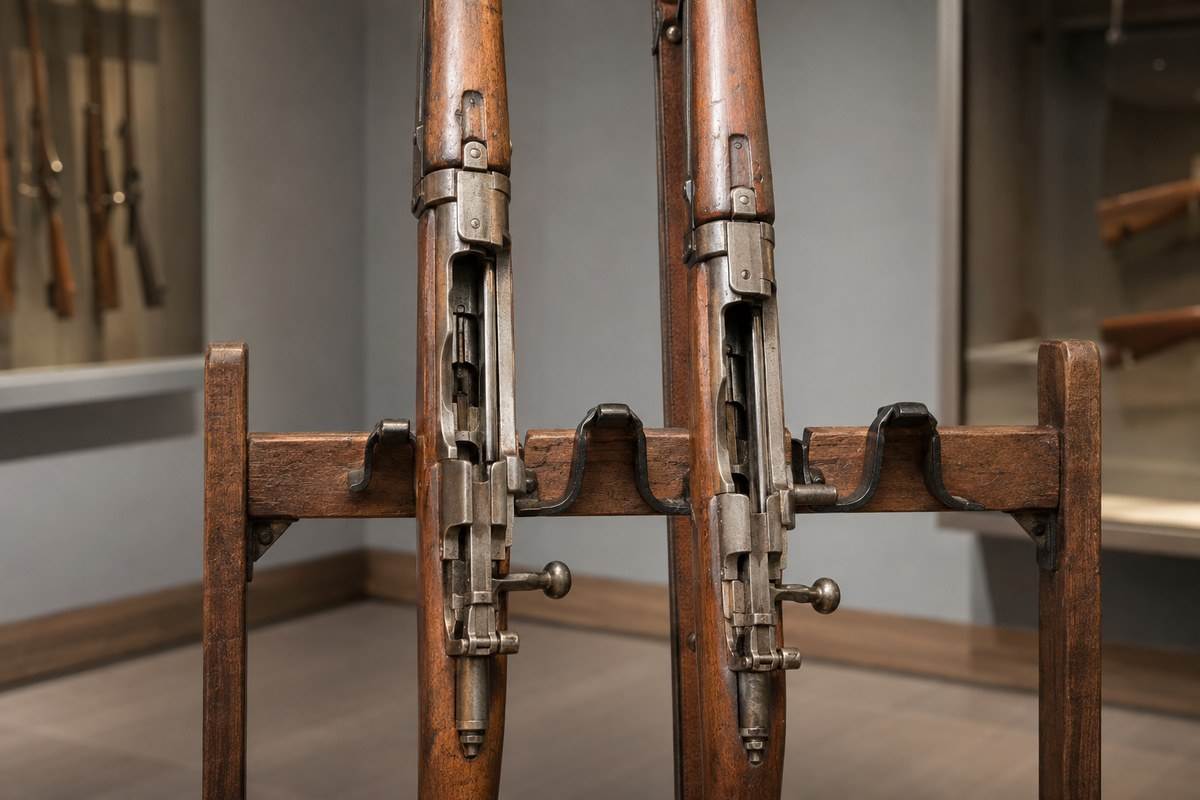
Originality does not always mean that every component left the factory together. Military rifles were commonly repaired, upgraded and returned to service. The relevant question is what kind of originality is being evaluated: original finish, original configuration, period-correct replacement parts, matching production details or an untouched assembly.
This distinction prevents two common errors: treating any replacement part as a loss of historical value, and calling a rifle "all original" because its surface has been made attractive. Fresh finish can obscure inspection marks, soften stamped edges and erase evidence of use. A sympathetic, documented preservation approach differs from an undocumented cosmetic makeover.
Look for relationships between parts. Read markings for placement, style and consistency. Wear patterns should make sense around contact points. Stock cartouches, repair marks and machining details may support one another, though none is conclusive without suitable reference material or expert review.
A practical record for the collector
Before forming an opinion, create a restrained record. Photograph markings in good light, note visible wear without cleaning it away and preserve documents that came with the rifle. Do not polish, refinish, stamp or replace parts merely to make the object appear more complete; such actions can remove irreplaceable evidence.
A useful assessment checklist is:
– Confirm safe handling and establish the firearm's unloaded condition through proper procedure.
– Record every visible marking, including its location and legibility.
– Separate observations from assumptions about service history.
– Identify parts that appear replaced, refinished or unusually clean.
– Compare the rifle with reputable reference sources or seek an independent specialist opinion.
– Check current official guidance before transporting, transferring or modifying a firearm, since laws and regulations can change.
This process is slower than judging a rifle by its shine, but it produces a more defensible description for future records or insurance discussions without turning uncertain history into a sales claim.
What the rifle still teaches
The M1 Garand's lasting influence is not limited to military history. It demonstrates how a service rifle can become a layered object: first a response to an operational problem, then a maintained tool, and later evidence of institutional practice and personal history. Its components preserve those stages unevenly.
For military rifle collecting, that unevenness is the point. Honest wear, documented alteration and careful preservation can each contribute to understanding. The best assessment does not ask whether an old firearm looks new. It asks what remains, what changed, who may have changed it and how confidently those conclusions can be supported.
That approach protects historical meaning and firearm safety while leaving room for uncertainty-the most accurate part of a rifle's biography.