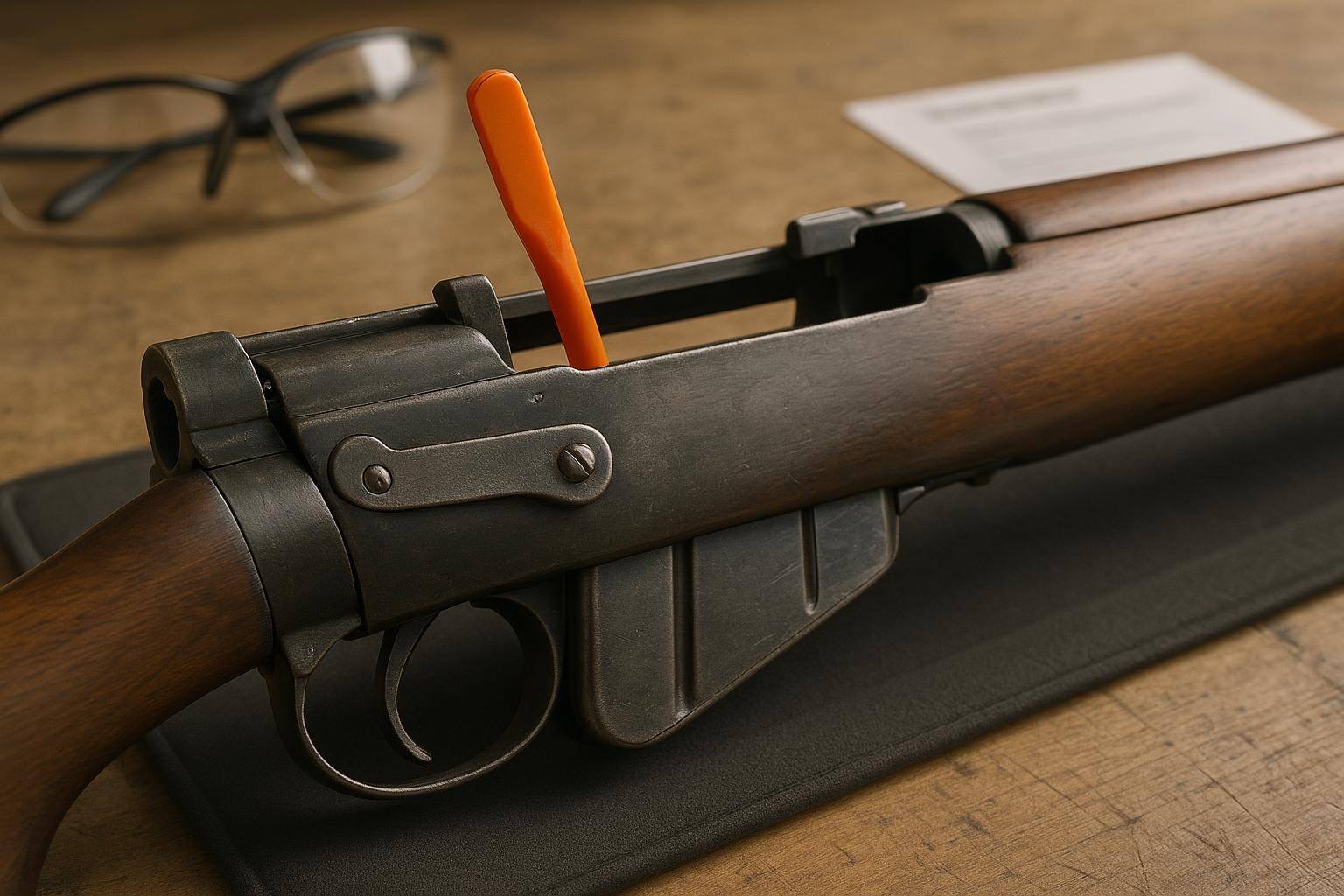

Understanding the Lee-Enfields Magazine Cut-Off: A Deeper Dive
The small steel plate on the side of early Lee-Enfield rifles might not catch your eye at first glance.. This piece, known as the magazine cut-off is far from just a decorative element. It was created to solve a military problem: how to give soldiers a repeating rifle without letting them waste their ammunition quickly.
Historical Context: The Need for Control
When the Lee-Enfield rifle was being developed military leaders were facing a choice. On one hand the magazine-fed rifle let soldiers fire faster. On the hand they worried that soldiers would use too much ammunition too quickly. In the field supplies were limited. Running out of rounds could mean the difference between life and death. The cut-off was designed to help manage this issue.
In its position the cut-off stops cartridges from moving into the chamber. This forced soldiers to fire one round at a time. It encouraged a careful and deliberate way of shooting. Of emptying magazines at any sight of the enemy trained soldiers could fire only when needed. This helped conserve ammunition. Made better use of every round.
The Dual Role of the Cut-Off
To understand the cut-off think of it like a gate. It controls how many rounds can get into the rifle. It's not a safety device in the sense. It doesn't stop a misfire. Prevent accidental discharge. Its job is to manage the flow of ammunition. That means it should not be confused with safety mechanisms like trigger guards or manual safeties.
The cut-off lever is simple in design. It has a plate and a handle.. It depends on how the soldier uses it. Over time wear and tear can cause the lever to stick or become loose. If it's hard to move. If it feels stiff that's a problem. The mechanism should move smoothly. Any sign of damage or resistance should be checked by a professional. Trying to force the lever can break it.
For collectors it's not enough to see the cut-off. You have to ask how it was used. Look for signs that it was changed or worn down from use. Was it left in the position? Was it often used? These details can show how soldiers really used the rifle in the field.
Trade-Offs Uncovered in Combat
The cut-off worked well in training.. Real combat was different. The battlefield was loud, fast and dangerous. Soldiers needed to react. The cut-off added a step. They had to remember to flip the lever before firing. In the heat of battle that step could be forgotten.. Worse it could be missed at a critical moment.
Because of this later versions of the Lee-Enfield had the cut-off removed. The military decided that speed and simplicity mattered more than the control the cut-off offered. Removing the lever made the rifle easier to use. It reduced the chance of confusion. It also simplified manufacturing. Less parts meant things to break.
This change shows a truth. Well-designed parts can lose their value. If a feature makes things harder in situations it might not be worth keeping. Military decisions are not about performance. They are about training, cost and reliability. The cut-off may have been smart on paper. In the field it was less useful.
Evaluative Practices for Historical Firearms
If you're looking at a Lee-Enfield with a magazine cut-off take it seriously. Treat it like a piece of history. Never forget safety. Start with a visual inspection. Look at the receiver. Check for cracks. Look for rust. Look for signs that the cut-off has been changed or removed.
Follow a safety checklist every time:
– Make sure the rifle is unloaded.
– Keep the muzzle pointed in a direction at all times.
– Know the model you're working with. Look up sources to see what the cut-off should look like.
– Check the lever and plate for damage. Does it move freely?
– If it's hard to move. If it sticks, stop. Do not force it. Get help from an expert.
Always respect the law. Laws about firearms vary from place to place. Before you handle any gun make sure you know what is allowed where you are.
The Legacy of the Cut-Off
The magazine cut-off is more than a part. It's a story. It tells us about how soldiers were trained. It shows how armies thought about ammunition. It shows how decisions were made under pressure.
It reminds us that no weapon is perfect. Every feature has a trade-off. A rifle must balance firepower with control. It must be easy to use but reliable. It must be tough, but not too complex. The cut-off was a solution to a problem.. It wasn't the best solution for every situation.
Understanding the cut-off helps collectors and enthusiasts see the rifle in a way. It's not about the metal and the mechanics. It's about the people who used it. It's about the choices made in war and in peace.. It's about the balance, between control and speed-two forces that always shape how we fight.